






The EVOCAN process guide
Starch or starchless?
Start with what you make.
Two ways to form a gummy. Different demands on the recipe, the factory and the team running it. Use this guide to narrow your options before you choose equipment.
First, the distinction
The mold is the difference.
In starch molding, impressions in conditioned starch form the cavities. In starchless molding, the depositor fills reusable molds. “Starchless” refers to the molding method; it does not certify the ingredients or claims of the finished candy.
Starch mogul
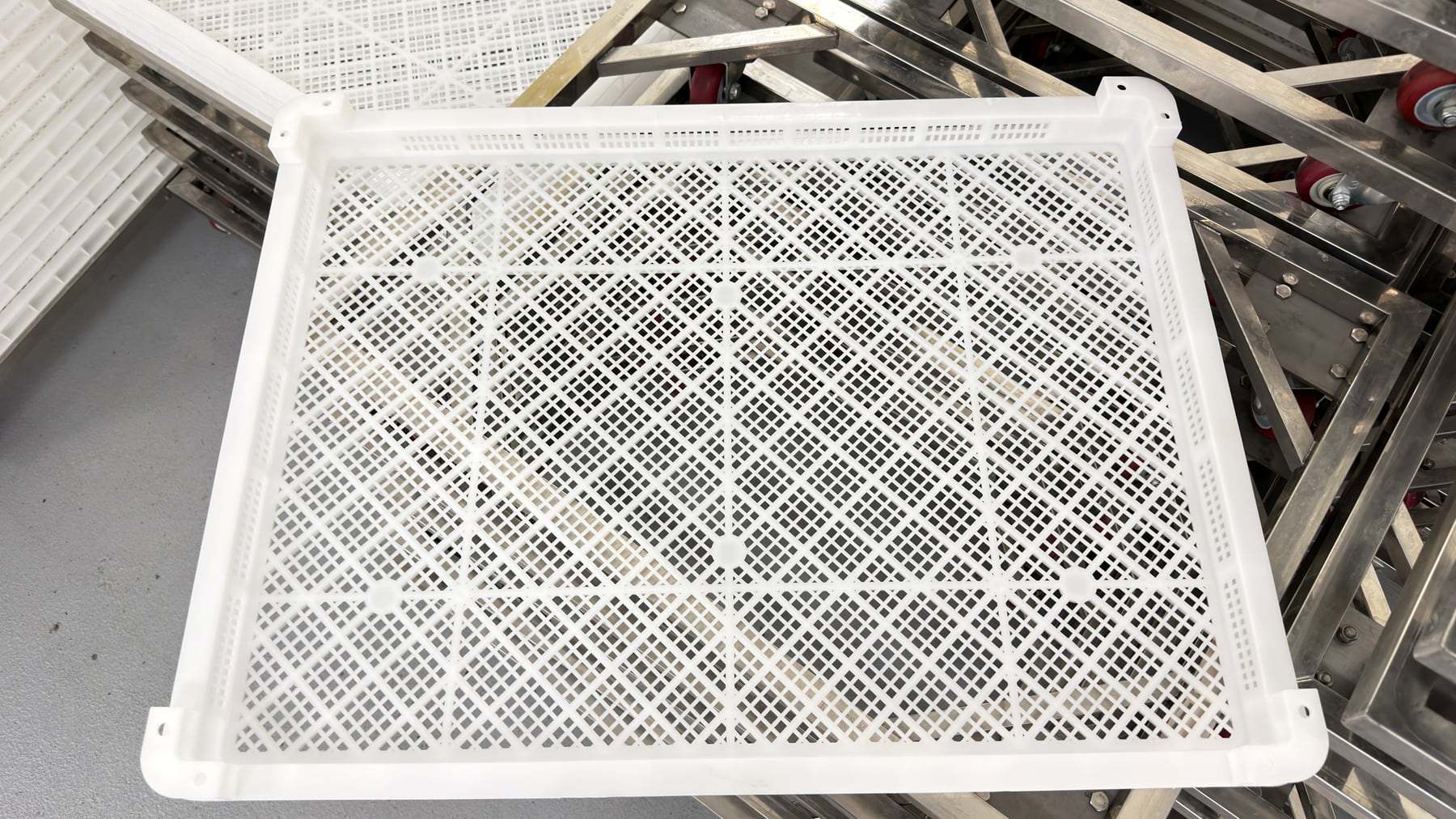
- Fill a tray with conditioned starch.
- Stamp impressions using a printing board.
- Deposit the candy mass into the impressions.
- Hold trays under the required curing conditions.
- Separate the candy, remove residual starch and finish.
- Recover and condition starch for reuse.
The starch forms the shape and can take up moisture. Printing boards offer a way to change the cavity pattern. Curing and starch condition are part of the process, not separate afterthoughts.
Starchless depositing
- Prepare the reusable molds.
- Deposit the prepared candy mass.
- Set or cool under the required conditions.
- Demold and apply the specified finishing.
- Condition further if the product requires it.
- Clean and return molds to production.
Reusable molds replace the starch bed. Material and release method depend on the system. Recipe and setting behavior must suit the chosen mold and line; removing starch handling does not remove the need for process development.
Process references: Syntegon’s molding and starch-handling overview; Tanis molding guide (PDF).
Compare the operating decisions.
These are selection considerations, not universal performance guarantees. Match the actual recipe and quoted configuration.
| Decision | Starch mogul | Starchless |
|---|---|---|
| Forming the shape | Print board makes impressions in a starch bed. | A reusable mold defines the cavities. |
| Moisture & setting | Starch absorption and controlled curing form part of the process. | Recipe solids, cooling and any subsequent conditioning must achieve the target texture. |
| Changing shape | Discuss print-board changes and tray pattern. | Discuss replacement molds, inventory and compatibility. |
| Cleaning | Include starch recovery and possible carryover in the cleaning plan. | No molding-starch circuit; molds and all product-contact surfaces still need validated cleaning. |
| Space | Include starch equipment, curing rooms and tray circulation. | Include molds, cooling or setting, demolding and conditioning space. |
| Output | Evaluate the complete loop, including curing and release. | Evaluate mold circulation, setting and demolding, not only depositing speed. |
| Product range | Evaluate recipe, shape and filling flexibility through trials. | Evaluate recipe, mold release and filling compatibility through trials. |
Background: Baker Perkins on process complexity and Syntegon on coordinating starchless recipes and equipment. Configuration-specific claims from those suppliers are not specifications for EVOCAN machines.
Let the product lead.
“Gummy” is a category, not a complete equipment specification. Two gummies with the same shape may need different processing conditions.
Recipe and texture
Share the gelling system, target texture, deposited solids, piece weight and finished moisture or water-activity target with your technical team. A recipe that performs well in one process may need development for the other. Ask for trials with representative ingredients and the intended mold or print pattern.
Filled, layered or aerated products
Define the filling ratio, number of colors, layers and any aeration. Ask which capabilities belong to the offered depositor, which need additional modules, and which have been demonstrated with a comparable recipe. Center filling is not unique to starch molding.
Functional ingredients and separation
For vitamin, supplement or other active-ingredient products, review dosing, heat exposure, hold time, cleaning and carryover with your quality team. Starchless equipment can simplify removal of the starch-handling loop; it is not an automatic compliance or accuracy guarantee. A starch system also needs a product-specific quality assessment.
Prove the finished piece
Agree on acceptance criteria before purchasing: piece weight variation, shape definition, release, surface finish, texture and shelf-life testing. A successful short demonstration is a starting point; ask how the process behaves over a planned production run.
Technical context: Baker Perkins depositing applications and Syntegon functional gummy production. Trial and purchasing questions above are EVOCAN’s planning framework.
Price the factory.
Not just the machine.
There is no honest universal break-even output or equipment price for these two processes. Compare proposals against the same product, saleable output and operating schedule.
Capital to include
- Ingredient handling, cooking, depositing and finishing.
- Starch conditioning and tray handling, or reusable molds and demolding.
- Curing rooms, cooling and environmental controls.
- Utilities, building work, installation and commissioning.
- Training, initial spares, freight and project contingency.
Running costs to test
- Labor by shift, including cleaning and material movement.
- Energy, water, consumables and mold or tray replacement.
- Changeover time and the actual production schedule.
- Rejects, rework, downtime and maintenance.
- Work in process, storage and packaging bottlenecks.
Compare cost per saleable kilogram: annualized ownership costs plus annual operating costs, divided by annual saleable output. Run conservative, expected and high-utilization cases. A bigger depositor does not guarantee more packaged product if another stage limits the line.
Space and utilities
Prepare a floor plan with usable ceiling height, doors, service access and material routes. Record your available electrical supply, heating and cooling utilities, compressed air and drainage. Ask for a complete installed layout and utility schedule before committing to a line.
Starch dust belongs in the facility plan
Starch dust can present a combustible-dust hazard. A mogul project needs site-specific assessment of collection, housekeeping, ignition control and protective measures by qualified specialists. An optional motor does not establish whole-line or facility compliance. Other confectionery powders can also require assessment on starchless lines. OSHA’s combustible-dust overview explains the underlying hazard.
A useful starting point
Which process should you explore?
This short check gives a discussion direction, not an engineering recommendation. We still need your recipe, output, budget and facility details.
Continue to the project questionnaire to add output, budget, email and phone number. Your process-check answers will accompany the inquiry.
Discuss this with EVOCANBefore you choose.
Does starchless mean no drying time?
No. Some systems use recipes and cooling sequences designed for rapid release, but that does not establish the requirements of your product. Confirm setting, conditioning and packaging readiness through trials.
Is a starch mogul only for very large factories?
Assess the offered system and its supporting infrastructure against your actual demand. Do not use a blanket output threshold. Existing starch-handling capacity can change the economics significantly.
Can I run the same recipe on both?
Do not assume a direct transfer. Ask your process team to review solids, viscosity, setting, release and final moisture. Trials may identify formulation or operating changes.
Does fifth generation mean the best choice for everyone?
No. Review the specific access, transport and release features against your product and operating requirements. Compare the quoted scope and demonstrated results.
Which machines can EVOCAN help me compare?
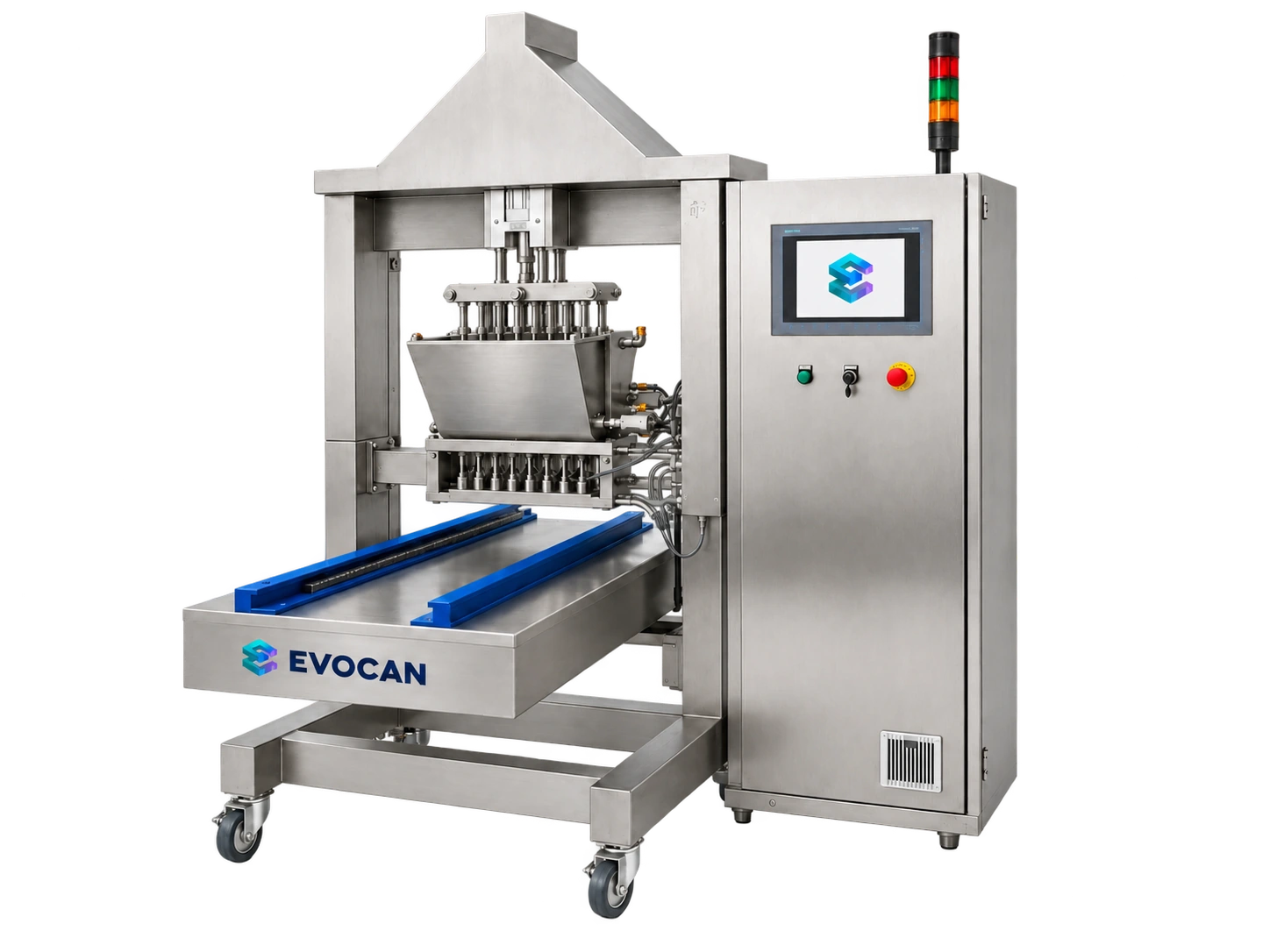
For starch molding, explore the SMD-II 10000 fourth and fifth generations, distributed by EVOCAN in North America. For reusable-mold production, explore our Tabletop Depositor, Mini Depositor Kit and EVO production lines.
Two routes. Your production brief.
Reviewed October 15, 2026. General process guidance; equipment fit is confirmed against your product and facility.